
Parle-G is the largest-selling biscuit in the world. It is manufactured in 130 factories in India, US, UK, Canada, New Zealand, Middle East, Australia and several other countries. 400 million Parle-G biscuits are baked every day. It is available in over a 100 countries and 4,500 biscuits are consumed every second. While the company has many products, the Parle G biscuits have annual sales of over INR 8000Cr (1bn US$) just by themselves, which is nearly half of the company’s annual turnover.

It was in the year 1929 when Mohanlal Dayal Chauhan started a small candy factory in Mumbai. Back then, candies were consumed only by the Britishers considering they were highly-priced. Mohan Lal Dayal was motivated, inspired by the Swadeshi Movement, to create an Indian candy and sell it at a lower price, so that the larger Bharatiya population could consume it. He quit his well-established silk business only to leave for Germany and learn the art of confectionery-making.
When he returned, he had both the necessary knowledge and the necessary equipment (imported from Germany for Rs 60,000 back then). He returned to India in the year towards the end of 1929 and started a small factory with only 12 workers, mostly from his extended family. With just 12 workers and German-imported machinery, the House of Parle was born.
The founder and team got so busy making candies that they forgot to decide the brand name, and eventually they kept it as Parle (because the factory was located in Parla, Mumbai). After the initial success of orange candy, 10 years later, the founder decided to launch a biscuit which created history. It was Parle Gluco.
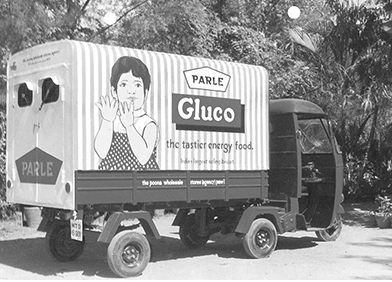
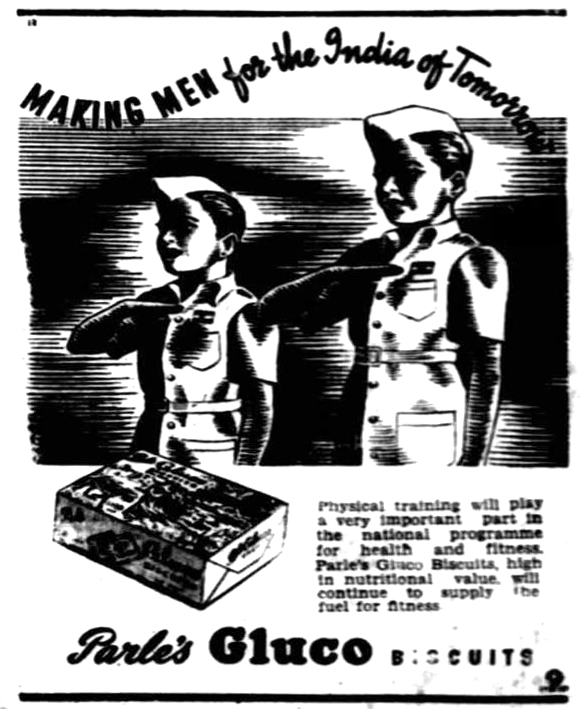
Parle-G: G for Genius
Parle Gluco continued to grow and yet kept pace with the times. With a stroke of re-branding genius, Parle Gluco transformed into Parle-G in 1982. The ‘G’, which initially represented glucose was playfully re-interpreted as ‘genius’.

The regular biscuit version of Parle-G is still priced at only INR 5/- for a packet of 10 biscuits (6 cents), and is one of the most affordable biscuits in the world. It has also won multiple awards over the years.

During natural disasters and wherever food needs to be airdropped, it is one of the most efficient way of delivering both sustenance and energy. During the recent pandemic, when the Indian government was supplying food packets to the underprivileged for sustenance, Parle G provided over 30 million packets of biscuits at no cost, to be included in those packets.
If you line up all the Parle G biscuits manufactured in a month, they are enough to cover twice the distance between the earth & the moon.